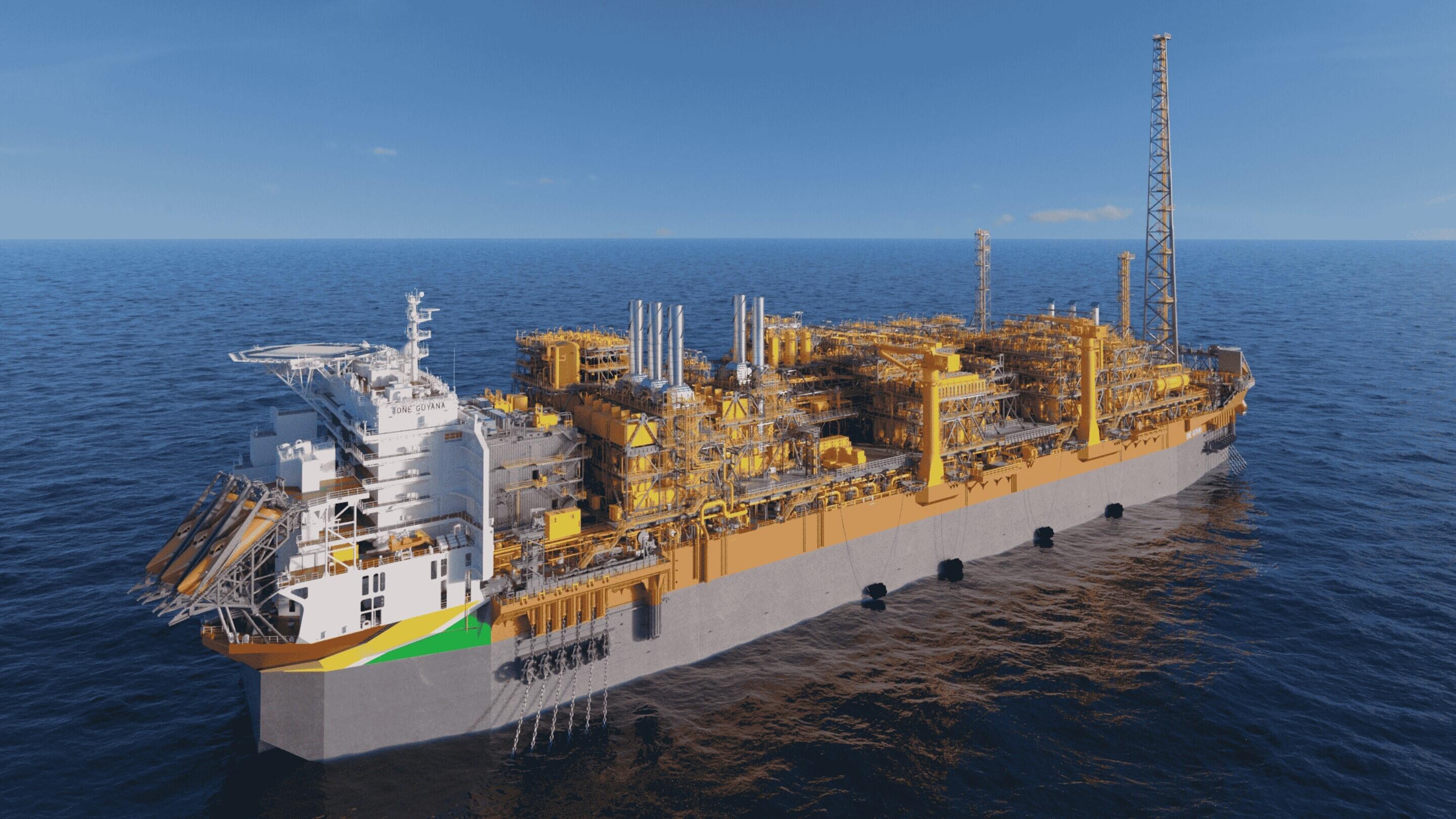


The P-79 FPSO set sail on November 11, 2025, from Hanwha Ocean’s shipyard in Geoje-Si, South Korea, bound for the Búzios field in the pre-salt Santos Basin.
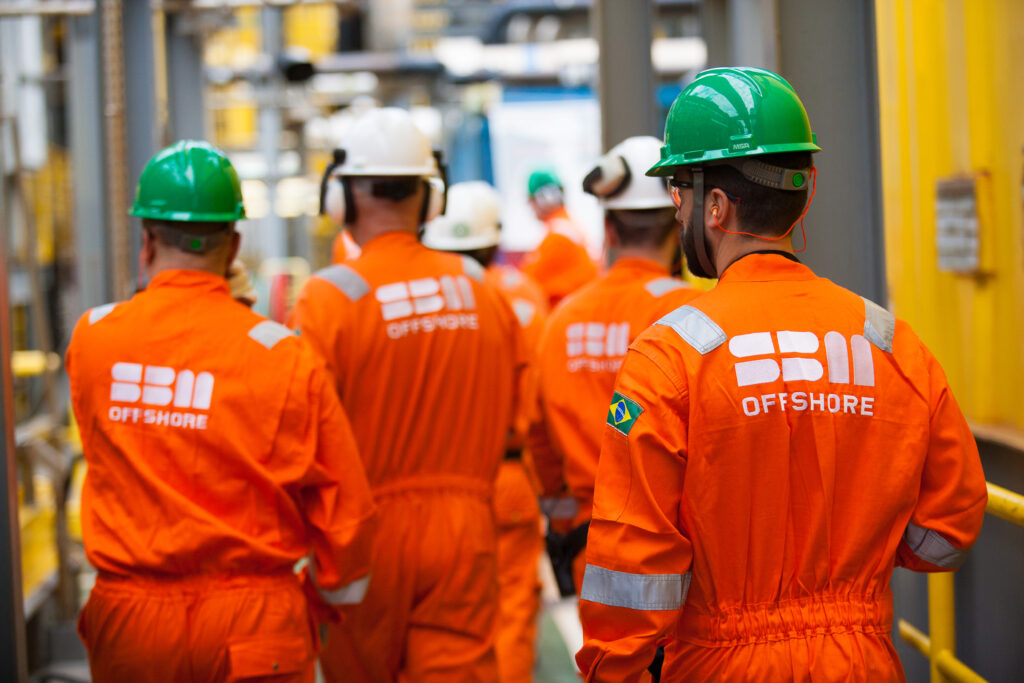
The unit is being towed with its crew already on board — a strategy that helps accelerate the start of production. The FPSO is expected to arrive at the field in February 2026.
“Bringing the platform fully crewed, as we did with P-78, has proven to be an effective strategy to reduce the time to first oil. This is the eighth of twelve planned units for the Búzios field. We expect to bring first oil two months ahead of the schedule outlined in our Strategic Plan. This achievement reflects the dedication of the entire Petrobras team, supported by strong supplier negotiations, detailed planning, and, above all, disciplined execution,” said Renata Baruzzi, Director of Engineering, Technology and Innovation at Petrobras.
Renata recently visited the Hanwha Ocean shipyard together with Sylvia Anjos, Petrobras’ Director of Exploration and Production, to authorize the FPSO’s departure to the Búzios field.
First oil for P-79 is currently scheduled for August 2026. With the addition of P-79 — and P-78, which is planned to begin production this December — Búzios’ total installed production capacity will increase by approximately 15.6%, reaching around 1.3 million barrels per day.
Located in ultradeep waters of the Santos Basin (with depths reaching 2,100 meters) and 180 km off the coast of Rio de Janeiro state, the Búzios field currently has six FPSOs in operation: P-74, P-75, P-76, P-77, Almirante Barroso, and Almirante Tamandaré. In October, the field surpassed 1 million barrels of oil per day, becoming Petrobras’ highest-producing asset.
The P-79 project consists of 14 wells — eight producers and six WAG injectors (water-alternating-gas). The hull was built at Hanwha Ocean in Geoje-Si, where integration and commissioning were carried out using topside modules constructed in China, Brazil, South Korea, and Indonesia.